
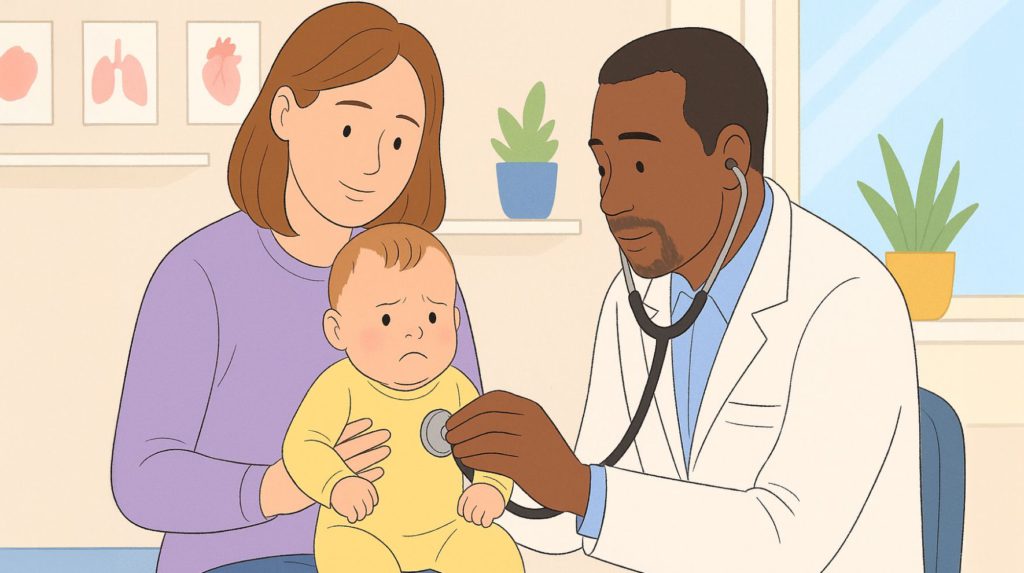
Find yourself double-checking every label and headline lately? You’re definitely not alone. A recent nationwide outbreak of infant botulism linked to contaminated formula has many parents feeling understandably anxious. As of early December 2025, the FDA and CDC have confirmed 39 cases across the U.S., connected to certain ByHeart formula batches that were voluntarily recalled after possible contamination was detected. Public health teams are still sorting through the details, but one takeaway is clear: staying informed and recognizing the early signs matter.
Infant botulism is rare, but when it does occur, quick recognition and prompt medical care can make a big difference. Understanding what it is, how it shows up, and how to prevent it can help you navigate this moment with more confidence and peace of mind.
What is infant botulism?
If you’ve been hearing the word botulism a lot over the past few weeks but still aren’t totally sure what it actually is, you’re not alone. It’s one of those terms that suddenly pops up everywhere during an outbreak, yet most parents (and honestly, many doctors) rarely encounter it in real life. The good news? A little clarity goes a long way, especially when your baby suddenly refuses a bottle for no apparent reason.
Infant botulism occurs when spores of the bacterium Clostridium botulinum are swallowed or inhaled by a baby. These spores are harmless to older kids and adults because our gut bacteria keep them in check. But in infants, especially below 6 months, the digestive system is still developing. That means the spores can settle in, germinate, and start producing a powerful botulinum neurotoxin inside the intestines.
This is the same family of toxins used in medical Botox, but in babies, produced in the wrong place, it becomes dangerous. The toxin disrupts how nerves communicate with muscles, essentially “blocking” signals that tell muscles to move. That’s why symptoms often show up as constipation, weak sucking, a quieter cry, or changes in muscle tone.
Because the toxin affects the nervous system, infant botulism is considered a medical emergency. But what also matters is that, with early recognition and quick treatment, most babies make a full recovery.
Infant botulism affects children under 12 months, but babies under 6 months are the most vulnerable because their gut microbiome (the helpful bacteria that normally crowd out harmful germs) isn’t fully established yet. The condition is rare, but understanding it helps you feel steady and informed, not scared.

Did you know?
One of the first recognized infant botulism clusters in the U.S. appeared in California in 1976, when doctors noticed several babies with the same unusual symptoms. That discovery led California to become the national hub for monitoring and treating infant botulism, and it’s where BabyBIG® was later developed.
Why are babies particularly vulnerable?
So now that you know how infant botulism happens, here’s the “why.” Babies aren’t just tiny adults, especially when it comes to their digestive systems. Their gut microbiome (all the good bacteria that help protect us from harmful germs) is still under construction during the first year of life. Think of it like a neighborhood where only a few houses are built, there’s lots of open space for the wrong visitors to settle in.
Because of that:
- Botulism spores have an easier time germinating in infants, especially under 6 months.
- Older kids and adults swallow these spores all the time from dust or soil without getting sick; their guts just shut the spores down.
- Babies, meanwhile, don’t yet have that fully developed “protective shield,” so the spores can grow and produce toxins before the body knows how to stop them.
And here’s the curveball: These spores are everywhere in the environment. They naturally live in soil, dust, and sand, which means you can’t completely avoid them (and shouldn’t drive yourself wild trying). Vacuuming your carpets twice a day won’t eliminate them. Avoiding the outdoors won’t eliminate them. They’re simply part of nature.
The one preventable source we do know about is honey, which is why pediatricians are so firm about the “no honey before age 1” rule. Honey can naturally contain botulism spores, and babies’ guts just aren’t ready to handle them.
What are the symptoms of infant botulism?
Parents always joke that babies should come with manuals, but what they actually come with is a million tiny cues only you pick up on.
Infant botulism tends to whisper before it shouts. The earliest signs are often subtle shifts in your baby’s usual rhythm. Things to watch for include:
- Constipation (often the very first sign)
- Poor feeding or suddenly struggling to suck
- A weak or “different” cry
- Droopy eyelids or less facial movement
- Floppiness or decreased muscle tone
- Less head control than usual
- Overall sluggishness or seeming “off.”
How soon do signs of infant botulism appear?
Symptoms can show up surprisingly fast or take their time. Babies may develop signs within a few days, but it can take up to 30 days after swallowing something that contains C. botulinum spores, including contaminated formula. And here’s an important reassurance: infant botulism is very rare. Even if a baby is exposed, many will never develop the illness. Trust your instincts; you know your baby’s baseline better than anyone else.
Why early diagnosis and treatment matter
Here’s the part where every pediatrician enthusiastically nods: timing makes a huge difference. Good news, though, infant botulism is very treatable.
Doctors typically use an antitoxin that stops the illness from progressing. Most babies need some supportive care (like feeding help or a little monitoring), but with early medical attention, recovery is the norm. Babies are resilient like that.
If your baby shows any signs of a medical emergency, such as poor feeding, sudden loss of head control, or unusual muscle weakness, call 911 or go to your nearest emergency room right away.
Good to know
As per the U.S. FDA website, parents and caregivers with concerns about this outbreak or infant botulism can call the California Department of Public Health hotline at 1-833-398-2022. The hotline is available daily from 7 a.m. to 8 p.m. PST.
What can parents do to prevent infant botulism?
“Prevention” sounds like a big, intimidating word, but most of it is stuff you’re probably already doing without thinking. According to the American Academy of Pediatrics (AAP), here are a few simple steps:
- Avoid giving any form of honey to babies under 12 months: this includes plain honey, honey-flavored water, or honey in foods.
- When feeding formula or other foods, follow hygiene best practices: clean bottles thoroughly, wash hands and surfaces, avoid exposure to dust/soil, though spores can be impossible to eliminate.
- Be alert to early warning signs: changes in bowel habits, feeding behavior, muscle tone, cry, and facial expressions. Early subtle signs should prompt a call to your pediatrician.
- If there’s a recall (like the recent ByHeart recall), follow instructions carefully: stop use, keep or discard products as advised, and monitor the baby’s health for several weeks after last exposure.
Conclusion
Infant botulism is rare. But because it can be serious, even life-threatening, it’s worth knowing what it is, how to prevent it, and how to spot it early. If your baby shows any concerning signs (poor feeding, weakness, changes in cry or movement), trust your instincts, call your pediatrician, or head to the ER. Early action saves lives.
As your little one grows and develops, staying informed and careful helps give you and your baby the peace of mind you deserve.
FAQs
Q: 1. What exactly is infant botulism?
A: Infant botulism happens when a baby swallows C. botulinum spores that start producing toxin in their still-developing gut. This toxin affects the nerves and muscles, causing symptoms like constipation, weak feeding, and reduced muscle tone.
Q: 2. Why are babies more at risk than older kids or adults?
A: A baby’s gut microbiome isn’t fully built yet, which means they don’t have the protective bacteria older kids and adults rely on. That gives botulism spores more room to grow and make toxin.
Q: 3. What early symptoms should I look out for?
A: Constipation is often the first clue. Other early signs include poor feeding, a weaker or unusual cry, droopy eyelids, floppy muscles, and decreased head control.
Q: 4. Why does early diagnosis and treatment matter so much?
A: The toxin affects the nervous system, so early detection allows doctors to administer BabyBIG®, the only FDA-approved antitoxin. Given promptly, it can shorten the illness and help babies recover more quickly.
Q: 5. What can I do to help prevent infant botulism?
A: Avoid giving honey before age 1, follow good bottle and feeding hygiene, and stay aware of recalls or safety alerts. Prevention isn’t about perfection, it’s about small, practical precautions.
You may also like
- Norovirus in children: When symptoms peak and when they finally stop.
- RSV in babies: Why this common virus can turn serious in newborns
- The rooting reflex in babies: Their built-in GPS for milk
Sources:
- Clinical overview for healthcare professionals on infant botulism. Centers for Disease Control and Prevention. n.d.“Clinical overview: Infant botulism.”
- Comprehensive review of infant botulism management. National Center for Biotechnology Information (NCBI).2024. “Infant botulism: A clinical and epidemiological review.”
- Early clinical findings on infant botulism. The Journal of Pediatrics. 1982. “Study of infant botulism cases and Clostridium botulinum organisms.”
https://pubmed.ncbi.nlm.nih.gov/6763147/ - FDA investigation into infant botulism and formula safety. U.S. Food & Drug Administration. 2025. “Outbreak investigation: Infant botulism and infant formula (November 2025).”
- General clinical overview of botulism. Centers for Disease Control and Prevention. n.d. “About botulism.”
- Manufacturer update regarding voluntary recall in 2025. ByHeart. 2025. “An update from our founders on our voluntary recall.”
- Parent-focused education on botulism in children. KidsHealth (Nemours). n.d. “Botulism.”
- Parent-friendly overview of botulism symptoms and safety guidance. HealthyChildren.org (American Academy of Pediatrics). n.d. “Botulism.”
- AAP symptom guidance for swallowed harmless substances. HealthyChildren.org (AAP). n.d. “Swallowed harmless substance: Symptom checker.”
- Symptom list and warning signs of botulism. Centers for Disease Control and Prevention. n.d. “Signs and symptoms of botulism.”
- CDC investigation summary of the November 2025 infant botulism outbreak. Centers for Disease Control and Prevention. 2025. “Infant formula botulism investigation update.”


