
You are now responsible for feeding and caring for a brand-new baby. Their meals are accounted for around the clock. Every latch, every ounce, every feeding session gets your attention.
But in the middle of all that, there’s another person whose nutritional needs often get pushed aside: you.
Many new moms spend so much time making sure their baby is fed that they forget their own body is still doing an incredible amount of work. Breast milk doesn’t appear out of nowhere. Your body is recovering from pregnancy and birth, adjusting to interrupted sleep, and producing nourishment for your baby day after day.
It’s not unusual for breakfast to turn into a cold cup of coffee, or for lunch to happen sometime after the baby’s afternoon nap, if it happens at all.
Breastfeeding doesn’t require a perfect diet or an entirely new way of eating. It does, however, increase your body’s energy and nutrient needs. Knowing what to keep in the fridge, which snacks are worth having on hand, and which breastfeeding nutrition myths you can safely ignore can make those early postpartum weeks a little easier.
Here’s what a balanced diet for breastfeeding moms actually looks like, and a few snack ideas you’ll be happy to find at 2 a.m.
Do breastfeeding moms need extra calories?
Yes. Producing breast milk requires additional energy. According to the American Pregnancy Association (APA), breastfeeding parents generally need an additional 300 to 500 calories each day, depending on factors such as activity levels and whether they’re exclusively breastfeeding. Instead of focusing on calorie counting, it can be helpful to pay attention to hunger cues. Breastfeeding parents often notice:
- Increased hunger between meals
- Feeling thirsty while nursing
- Needing an extra snack before bed or during overnight feeds
Adding a snack during the day may be enough to cover those additional energy needs.

Did you know?
According to the U.S. Dietary Guidelines for Americans, breastfeeding parents typically need an extra 330 to 400 calories each day to support milk production. That’s roughly the energy you’d use during a brisk 30- to 60-minute walk, depending on your pace and body size.
What nutrients are important while breastfeeding?
A breastfeeding diet doesn’t need special foods, but there are a few nutrients worth paying attention to.
Protein
Protein supports postpartum recovery and contributes to your overall nutritional needs.
Some easy protein options include:
- Eggs
- Greek yogurt
- Cottage cheese
- Chicken
- Lentils and beans
- Tofu
- Salmon
- Nut butters
- Cheese
- Milk or fortified soy milk
Calcium
The APA recommends including dairy foods such as milk, yogurt, and cheese while breastfeeding. If you don’t consume dairy, calcium can also come from fortified plant-based alternatives, tofu made with calcium sulfate, or certain leafy greens.
Iodine
Iodine is especially important during breastfeeding because breast milk is the sole source of iodine for exclusively breastfed babies. The APA also recommends that breastfeeding parents consume adequate iodine through food sources or prenatal/postnatal vitamins when advised by their healthcare provider.
Foods containing iodine include:
- Dairy products
- Seafood
- Eggs
- Iodized salt
Omega-3 fatty acids
The Centers for Disease Control and Prevention (CDC) recommends eating two to three servings of lower-mercury fish each week during breastfeeding. Fish such as salmon, sardines, trout, and herring are good sources of DHA, an omega-3 fatty acid important for infant brain development.
How much water should breastfeeding moms drink?
Many parents keep hearing they need to drink “a gallon of water” while breastfeeding. There isn’t a specific amount that’s recommended for everyone.
Breastfeeding increases your body’s fluid needs because water is a major component of breast milk. According to the Academy of Nutrition and Dietetics, breastfeeding parents need about 16 cups (3.8 liters) of fluids each day, including water, beverages, and moisture from foods like fruit, soup, and yogurt.
That number can sound intimidating during the newborn stage, especially when you’re already juggling feeds, diaper changes, and very little sleep. A simple habit that mums as well as lactation consultants recommend is taking a few sips during each nursing session can make it easier to stay hydrated without having to think about it.
Some practical ways to stay hydrated include:
- Keeping a water bottle next to your nursing chair.
- Refilling your bottle every time you sit down to feed your baby.
- Drinking water with meals and snacks.
- Having water nearby during overnight feeds.
Are there foods you should avoid while breastfeeding?
For most breastfeeding parents, the answer is no.
The USDA states that there are no foods you need to avoid simply because you’re breastfeeding. Babies are exposed to a wide variety of flavors through breast milk, which may even help them become familiar with foods later in infancy.
Foods that are commonly questioned include:
- Garlic
- Spicy foods
- Citrus fruits
- Chocolate
- Broccoli and cauliflower
- Dairy products
If you notice symptoms such as persistent eczema, blood or mucus in stools, or unusual feeding behaviors in your baby, it is best to discuss the dietary changes with your pediatrician before removing foods from your diet. These foods are generally safe to eat while breastfeeding unless your pediatrician recommends avoiding them.
Can you drink coffee while breastfeeding?
Don’t worry, your coffee doesn’t automatically go off the menu after birth.
The CDC recommends limiting caffeine intake to approximately 300 mg per day while breastfeeding. Higher amounts may affect some babies, particularly newborns or premature infants, who metabolize caffeine more slowly.
For your reference, approximately:
- One mug of instant coffee contains about 100 mg of caffeine.
- One cup of brewed coffee may contain 140 mg or more depending on preparation.
Not only in coffee, but caffeine can also be found in:
- Tea
- Chocolate
- Energy drinks
- Some soft drinks
If your baby appears unusually wakeful or irritable after caffeine consumption, you may want to monitor how much you’re consuming throughout the day.
Snacks breastfeeding moms can eat with one hand
The reality of postpartum eating is that you may not always have time to sit down for a full meal.
Many breastfeeding parents find themselves eating while:
- Nursing during cluster-feeding sessions.
- Rocking their baby to sleep.
- Contact napping.
- Pumping.
- Feeding their newborn in the middle of the night.
Snacks that combine protein and carbohydrates tend to be more filling than foods that are mostly sugar.
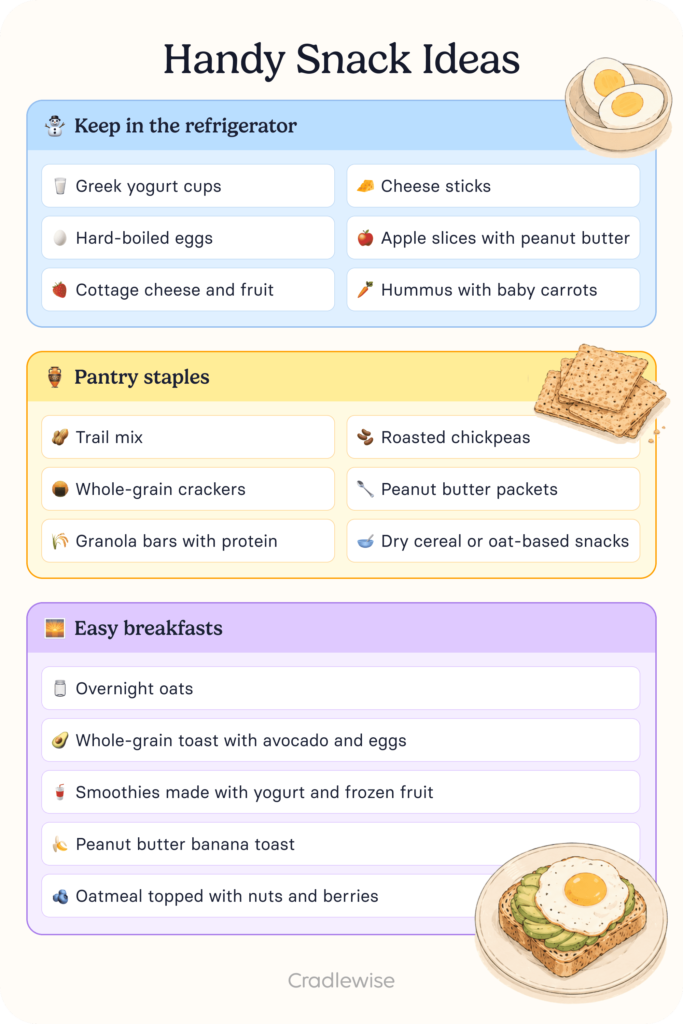
Many moms eventually discover their “feeding spots” around the house, the corner of the couch where cluster feeds happen, the nursery chair that gets the most use, or the side of the bed where those early-morning nursing sessions take place.
Keeping a small basket stocked with snacks in those spaces can be surprisingly helpful. A handful of nuts, a granola bar, or some crackers within arm’s reach means one less thing to think about when your day is already revolving around feeding a tiny human.
Breastfeeding on a vegan or vegetarian diet
A vegetarian or vegan diet can absolutely support breastfeeding, but it may require a little more planning to ensure both you and your baby are getting certain nutrients.
One nutrient that deserves particular attention is vitamin B12. According to the CDC, breastfed infants of parents who consume no animal products can receive very small amounts of vitamin B12 through breast milk if their parent is deficient. Because vitamin B12 plays an important role in brain and nervous system development, low levels can lead to serious health concerns in infants if left untreated.
Iron is another nutrient to keep an eye on. Plant foods provide non-heme iron, which isn’t absorbed as efficiently as the heme iron found in meat, fish, and poultry.
If you’re following a vegetarian or vegan diet while breastfeeding, talk to your healthcare provider about whether supplementation may be appropriate for:
- Vitamin B12
- Iron
- Choline
- Zinc
- Iodine
- Omega-3 fatty acids (EPA and DHA)
Foods such as fortified cereals, nutritional yeast, beans, lentils, tofu, nuts, seeds, and fortified plant milks can help fill nutritional gaps, but some parents may benefit from continuing a prenatal or postnatal vitamin supplement during breastfeeding.
Breastfeeding doesn’t require changing a vegan or vegetarian lifestyle, but it is a good time to check in on nutrients that are easier to obtain from animal products.
Conclusion
The postpartum days have a way of blurring together. You may start the morning with a hot breakfast and end the day realizing your afternoon snack was a handful of crackers grabbed during a contact nap. Feeding yourself while caring for a newborn isn’t always straightforward. There will be days when you sit down for a proper meal, and days when you’re eating a banana with one hand while settling your baby with the other.
Breastfeeding nutrition doesn’t have to look Instagram-worthy to be nourishing. Keeping a few filling snacks within reach, drinking water throughout the day, and making sure you’re eating regularly can help support both your recovery and the energy it takes to feed a growing baby.
FAQs
Q: What should a balanced diet for a breastfeeding mom include?
A: A balanced breastfeeding diet should include a mix of protein, whole grains, fruits, vegetables, healthy fats, and calcium-rich foods. Nutrients such as iodine, iron, vitamin B12, and omega-3 fatty acids are also important during the postpartum period.
Q: How many extra calories do breastfeeding moms need?
A: According to the American Pregnancy Association, many breastfeeding parents need an additional 300 to 500 calories per day to support milk production. Individual needs can vary depending on activity levels and how often a baby nurses.
Q: Are there foods that should be avoided while breastfeeding?
A: Most breastfeeding moms do not need to avoid specific foods. Garlic, spicy foods, chocolate, citrus fruits, and cruciferous vegetables are generally considered safe. If your baby develops symptoms such as persistent eczema, blood in their stool, or unusual feeding behaviors, speak with your pediatrician before making dietary changes.
Q: Can I drink coffee while breastfeeding?
A: Yes. Moderate amounts of caffeine are considered compatible with breastfeeding. Small amounts of caffeine can pass into breast milk, so it’s helpful to keep an eye on your intake if your baby seems unusually wakeful or fussy.
Q: Can I follow a vegan or vegetarian diet while breastfeeding?
A: Yes. A vegan or vegetarian diet can support breastfeeding, though some parents may need additional vitamin B12, iron, iodine, zinc, choline, or omega-3 fatty acids. Your healthcare provider can help you determine whether supplementation is appropriate.
Sources:
- Nutrition guidance for breastfeeding parents. American Pregnancy Association. 2024. “Nutrition During Breastfeeding”
- Dietitian-backed tips on building a healthy breastfeeding diet. American Pregnancy Association. 2024. “Breastfeeding Diet Basics: Registered Dietitian”
- How a mother’s diet affects breast milk nutrients. Centers for Disease Control and Prevention (CDC). 2025. “Maternal Diet and Breastfeeding”
- Why food and drink choices matter while nursing. Academy of Nutrition and Dietetics (EatRight). 2024. “Nursing Your Baby: What You Eat and Drink Matters”
- Research on flavor transfer from a maternal diet into breast milk. Nutrition Evidence Systematic Review (USDA).2020. “What Is the Relationship Between Maternal Diet During Lactation, Flavor Transfer to Breast Milk, and Child Acceptance of Flavors?”
- Evidence-based recommendations on maternal nutrition during lactation. Centers for Disease Control and Prevention (CDC). 2025. “Maternal Diet and Breastfeeding”