If you’ve just had an episiotomy, you’re most likely in pain, anxious about your next trip to the bathroom, wondering when your episiotomy stitches will heal and when this will end. No one warned you that the hard part wouldn’t be the delivery or the hospital stay, but sitting, sleeping, and going to the toilet.
All of this is normal when you have had an episiotomy for vaginal birth.
In this guide, we will walk you through how long the soreness really lasts, when the stitches heal, how to make your bowel movement easier, and when to call your doctor.
We also spoke to Dr. Dawn Ericsson, MD, FACOG, Chief Medical Director, AgeRejuvenation and Juliana Parker, a registered L&D Nurse, Founder of Nurse Core Triage, Inc who have shared their inputs on episiotomy healing and practical tips.
What is an episiotomy?
An episiotomy is a small surgical cut made in the perineum, the area of skin and muscle between the vaginal opening and the anus, to widen the vaginal opening during delivery. It’s repaired right after birth, usually with dissolvable stitches that don’t need to be removed.
An episiotomy is usually done if your baby is in distress, to assist delivery, and/or to prevent severe tears.

Did you know?
Up to 9 in 10 first-time mothers who have a vaginal birth end up with some kind of tear, graze, or episiotomy.
What to expect after an episiotomy
Activities such as sitting, walking, getting in and out of bed, urinating, and having a bowel movement may be uncomfortable at first. As the tissue heals, your episiotomy scar may feel a little firm, raised, tight, itchy, or sensitive.
Episiotomy vs. perineal tears
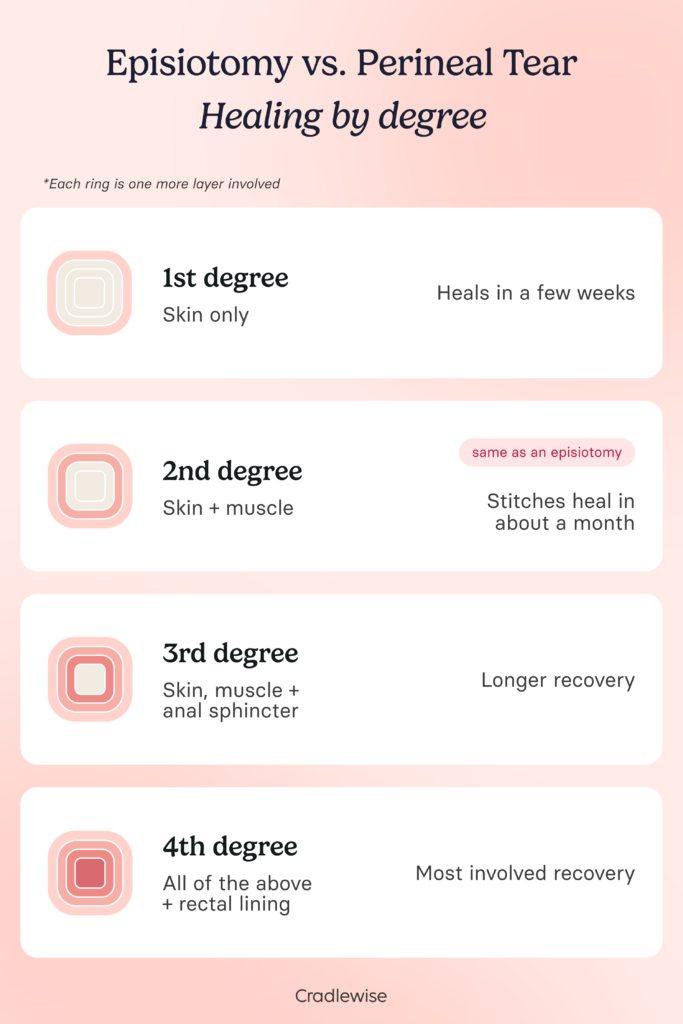
An episiotomy is a controlled surgical incision made through the vaginal opening and perineal tissue to create additional space during delivery. A perineal tear occurs naturally as the tissues stretch during childbirth.
Dr. Ericsson puts the comparison in context:
Perineal injuries are classified into four degrees based on how much tissue is involved, and an episiotomy is anatomically classified the same as a second-degree tear.
4 Types of Episiotomy
How long does it take to heal after an episiotomy
Healing doesn’t happen all at once as different layers of tissue heal on their own timelines:
- Bruising and swelling typically ease within 1-2 weeks.
- Stitches dissolve over roughly 2-4 weeks.
- The deeper muscle and connective tissue continue strengthening for 4-6 weeks and beyond.
As Dr. Ericsson explains, the skin healing on the surface is only a part of your entire healing journey:
Cradlewise Note: NHS UK notes that episiotomy pain usually settles within 2 to 3 weeks. Mild tenderness or pulling can linger longer, but pain that stays severe or gets worse is worth flagging to your doctor or midwife.
How long do stitches take to dissolve after birth?
Most stitches used in episiotomy repairs are dissolvable, and they usually take 2 to 4 weeks to dissolve on their own.
Dr. Ericsson explains how absorbable or dissolvable stitches work:
When can you wipe after birth with stitches?
Wait till your stitches dissolve to wipe with toilet paper as wiping can pull on stitches causing stinging. Pat gently, instead of wiping. Or skip wiping altogether and use a peri-bottle instead to clean the area. More on that below.
Episiotomy healing and recovery tips
The first several days are usually the most uncomfortable with even simple day-to-day functions feeling difficult, but symptoms gradually improve from there. Let’s see the process of healing after an episiotomy.
Before we go any further, knowing what to stock in your postpartum recovery kit may be useful.
How to go to the toilet after episiotomy?
Juliana Parker hears this worry from almost every new mom with stitches:
“ One of the first things I reassure patients about is that having a bowel movement is very unlikely to make their stitches come apart. The biggest thing is trying to keep the stool soft so you aren’t having to strain. Drink plenty of water, eat foods with fiber, and if your provider recommended a stool softener, take it.”
A few handy tips to make your bathroom visits a little less painful:
- Do not be afraid to poop. Holding it can make things worse because stool becomes harder and more difficult to pass.
- Use a peri bottle instead of wiping as much as possible in the beginning.
- Use warm water and rinse from front to back, then gently pat dry instead of rubbing.
- Use a peri bottle even while you’re urinating if the urine burns when it hits the stitches.
- Squat instead of sitting on the toilet, it reduces the stinging sensation when peeing, says NHS UK.
How to sit after episiotomy?
Avoid sitting on hard surfaces for a few days till your stitches are healed or dissolved. Sitting on a padded surface, a folded towel under your sit bones, or a donut-shaped pillow reduces direct pressure on the perineum.
How to get up from the bed?
The log roll method is one of the best positions while getting up from the bed as it protects your healing pelvic floor.
Roll your entire body to your side, while keeping your knees together. Now, with the help of your arms, push your upper body into a sitting position. Lower your legs gently off the edge of the bed and waddle slowly (without putting pressure on your perineum area) to reach the edge of the bed.
How to care for episiotomy wound?
Juliana Parker’s approach for the first few days is to keep the area clean with a peri-bottle and warm water, and gently pat the area dry.
She gives a few more care tips for your episiotomy site:
- Ice packs can help with swelling and soreness on the first day
- Take a warm sitz bath to soothe the site
- Avoid heavily scented soaps or scrubbing
- A postpartum numbing spray, such as Dermoplast, to help with burning and discomfort (check with your provider first)
How to sleep after episiotomy?
Sleeping on your side is one of the best sleeping positions after an episiotomy as it takes pressure off your stitches and reduces pain. You can place a pillow between your knees to make yourself more comfortable. Some new mothers also find sleeping on their back comfortable.
Avoid lying on your stomach as it puts direct pressure on your stitches.
How to manage episiotomy pain?
For pain relief, NHS UK notes that paracetamol is safe while breastfeeding, and ibuprofen is generally considered safe too, though it’s worth checking with your provider first.
Cradlewise Note: It is better to check with your provider, especially if you are breastfeeding, as some medicines can pass to your baby through breast milk.
When to start pelvic floor exercises after episiotomy
Ease in slowly rather than jumping straight into Kegels.
Juliana adds: Some women’s pelvic floor muscles are actually too tight after delivery, especially if they’re bracing against pain. If Kegels hurt, or you’re having ongoing pelvic pressure, urinary or bowel issues, talking with your provider about pelvic floor physical therapy can help.
How long after episiotomy can you have sex
Generally around 6 weeks. However, there’s no single date when intercourse becomes automatically safe or comfortable.
But being cleared for sex does not mean you have to be ready for sex, as Juliana Parker wants you to know:
She adds: You may technically be healed enough to have intercourse and still have tenderness, vaginal dryness, scar sensitivity, or just not feel ready yet.
For more on this stage, see our full guide on rediscovering intimacy and sex after birth.
When to call a doctor
While it is normal to expect some tenderness and pulling after the first couple of weeks, sometimes tenderness, pulling, sensitivity, or mild discomfort can still be present at six weeks postpartum, particularly with prolonged sitting, pressure, exercise, intercourse, or pelvic-floor activity. It does not necessarily indicate anything is wrong.
Contact your provider promptly if you notice:
- Pain that’s getting worse instead of gradually improving
- Increasing redness, warmth, or swelling around the incision
- Pus or unusual, foul-smelling discharge
- The incision appearing to separate or open
- New bleeding directly from the wound
- Difficulty controlling bowel movements or gas
- Pain during intercourse that persists after the area has otherwise healed
These symptoms can indicate infection, wound breakdown, pelvic-floor injury, or another complication that should be examined.
On the other hand, seek urgent or emergency care for:
- A fever of 100.4°F (38°C) or higher
- Fainting
- Severe or worsening abdominal pain
- Severe headache
- Vision changes
- Significant one-sided leg pain or swelling
Those symptoms can signal a postpartum complication unrelated to the episiotomy itself, and shouldn’t be brushed off.
Read our blog on postpartum recovery tips from a doula which might be helpful in your healing journey.
Conclusion
With your pregnancy and childbirth, your body just went through a lot, and if you’ve had an episiotomy, you also have an incision that needs to heal.
Give your body the time to heal. While the skin may appear to heal relatively quickly, the pelvic floor, muscles, connective tissues, and nerves may take weeks to months.
The healing is usually gradual, but consistent. Hence, if your pain is getting worse, continues longer than expected, interferes significantly with normal activity, or simply feels off, it is worth getting checked.
FAQs
Q: What is the best position to sleep in after an episiotomy?
A: Lying on your side, with a pillow between your knees, tends to be more comfortable than lying flat on your back in the first days.
Q: How to sit after an episiotomy?
A: A soft, supportive pillow (sometimes called a donut pillow) can take pressure off the area. Or use a rolled up towel or a soft cushion. Avoid hard surfaces for the first several days if you can.
Q: When can I expect my first poop after an episiotomy?
A: There’s no fixed timeline, and it varies by person, but most people go within a few days of delivery. Staying hydrated and eating fiber-rich foods helps keep things moving comfortably.
Q: Will my stitches open if I poop?
A: It’s very unlikely. The bigger risk is holding it in, which makes stool harder and more difficult to pass. A stool softener, if your provider recommends one, can make the whole process easier.
Q: How long after episiotomy can you have sex?
A: There’s no single safe date. Many providers check healing at the 6-week postpartum visit, but your readiness depends on your healing, comfort, and how you feel, and not just the calendar date.
Q: Do episiotomy stitches need to be removed?
A: No. Episiotomy repairs use dissolvable stitches that break down on their own over several weeks, so there’s no separate appointment needed just to remove them.
Q: Is it normal to still have pain after 6 weeks?
A: Some tenderness or pulling can linger at 6 weeks but it doesn’t mean your healing went wrong. The overall trend should be toward improvement. Pain that’s persistent, significant, or getting worse is worth having checked.
You may also like:
- How to relieve a clogged milk duct, and when to call a doctor.
- A balanced diet for breastfeeding moms (with snacks you’ll actually eat).
- Your first night home with a newborn: A practical survival guide.
Sources:
- An episiotomy is one of the most common procedures in childbirth. Royal College of Obstetricians and Gynaecologists RCOG. Perineal tears during episiotomy.
- Squat instead of sitting on the toilet. NHS UK. 2023. Episiotomy and perineal tears.
- Episiotomy pain. NHS UK. 2023. Episiotomy and perineal tears.