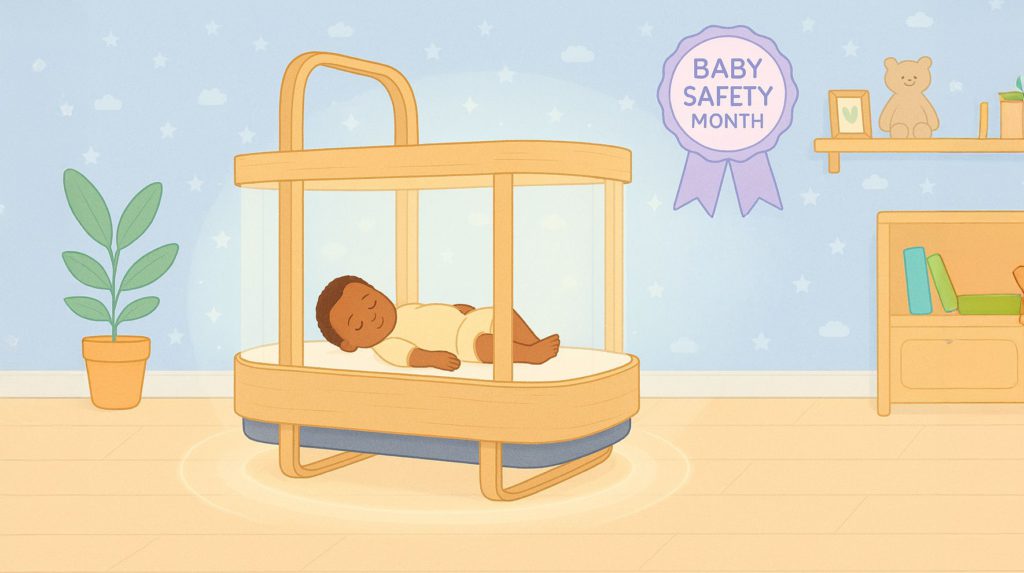
Every September, Baby Safety Month serves as a reminder to take a closer look at your baby’s daily routines, especially sleep. Creating safe sleep for babies isn’t complicated, but it does require consistency.
Babies spend most of their early months sleeping. That’s when their bodies are growing rapidly and when they’re most vulnerable. Small, evidence-based choices about where and how your baby sleeps can significantly reduce the risk of sleep-related deaths, including Sudden Infant Death Syndrome (SIDS).
The American Academy of Pediatrics (AAP) provides clear, research-backed safe sleep guidelines for babies. Yet myths, outdated advice, and picture-perfect (but unsafe) nursery trends still persist.
This checklist walks you through what truly matters so you can feel confident that your baby’s sleep space is not just cozy, but safe.
What is safe sleep for babies?
Safe sleep for babies means placing your baby on their back to sleep, on a firm and flat surface, in a crib or bassinet free of loose bedding, pillows, toys, or bumpers. These evidence-based practices are recommended by the American Academy of Pediatrics (AAP) to reduce the risk of Sudden Infant Death Syndrome (SIDS) and other sleep-related infant deaths.
The ABCs of safe sleep for babies
At its core, safe sleep for babies follows three simple principles:
- A – Alone: Your baby sleeps in their own space: a crib, bassinet, or play yard without pillows, blankets, toys, or you. Reserve cuddling for awake time; safe sleep means solo sleep.
- B – Back: Whether it’s a short nap or a full night, placing your baby on their back is proven to lower the risk of SIDS.
- C – Crib: Always use a firm, flat, safety-approved crib or bassinet with just a fitted sheet. It may look plain, but a crib with only a firm mattress and fitted sheet is the safest choice.
These ABCs are the foundation. Following them reduces sleep-related risks in the first year of life, but there’s more to consider to cover all the bases.
Crib and mattress safety
The Safe Sleep for Babies Act now prohibits the sale of crib bumpers and inclined sleepers in the US, reinforcing what pediatricians have long recommended: a bare crib is a safer crib. Here’s what to keep in mind:
Do’s
- Choose a crib, bassinet, or play yard that meets Consumer Product Safety Commission (CPSC) standards. The newer models are tested for today’s safety requirements.
- Use a firm, flat mattress with a snug fitted sheet. This keeps your baby’s airway clear and reduces the risk of suffocation.
- Keep the sleep space completely bare of pillows, bumpers, stuffed animals, or loose blankets.
- Even short, unsupervised naps should happen on a flat, firm sleep surface.
Don’ts
- Don’t add soft bedding, quilts, or comforters. They may look cozy, but they increase the risk of suffocation and overheating.
- Don’t let your baby sleep on couches, recliners, or adult beds. These surfaces are linked to higher infant death rates due to entrapment or falls.
- Don’t use inclined sleepers, wedges, or positioners. The AAP warns these can cause babies to roll into dangerous positions.
- Don’t overdress your baby or pile on blankets. Overheating has been identified as a risk factor for Sudden Infant Death Syndrome (SIDS).

Cradlewise Smart Crib
Smarter Sleep for Your Baby
An award-winning crib—loved by parents, approved by experts.
0 to 24 months of use
Automatic soothing
Built-in video & sound machine
AI-powered sleep insights
Customizable soundtracks
Get 2 extra hours of sleep nightly
Room sharing vs. Bed sharing
The American Academy of Pediatrics (AAP) is very clear: room sharing is recommended, bed sharing is not.
Keep your baby’s crib, bassinet, or play yard in your bedroom for at least the first 6 to 12 months. This makes nighttime feeding and soothing easier while keeping your baby close.
Is room sharing safer than bed sharing?
Yes. Studies show room sharing can reduce the risk of SIDS by up to 50%. Here’s how:
- Placing your baby in an adult bed increases the risks of suffocation, entrapment, and falls.
- Soft mattresses, pillows, and blankets on the bed can block airways.
- Even if your baby dozes off next to you or on your chest, it’s always safe to move them back to their crib or bassinet once they’re asleep.
Room sharing offers closeness and peace of mind. You keep your baby nearby, without the risks of sharing an adult bed. Doesn’t that feel like the best of both worlds?
Swaddles, blankets, and wearables
Swaddling can be a great soothing strategy in those first weeks. It mimics the snug feeling of the womb and helps some newborns settle. But swaddling is only safe when done right, and only for a short window of time.
Safe swaddling:
Safe swaddling:
- Wrap snugly around the arms, but leave room at the hips for healthy movement.
- Always place your baby on their back to sleep.
- Once your baby can roll both ways independently, you can let them find their own sleep position, but always place them on their back at the start of sleep.
Unsafe practices:
- Stop swaddling once your baby shows signs of rolling (often around 3-4 months). It increases the risk of suffocation.
- Don’t use thick or layered swaddles that cause overheating.
- Avoid placing weighted blankets, weighted sleepers, weighted swaddles, or other weighted objects on your sleeping infant.
When is it safe for babies to sleep with a blanket?
Loose blankets, pillows, or quilts should never be in the crib before your baby turns 12 months old. They increase the risk of suffocation and Sudden Infant Death Syndrome (SIDS).
The safer alternative is to switch to a wearable blanket or sleep sack. This keeps your baby warm and cozy, but offers free arm and leg movement ensuring the best of both worlds for comfort and safety.
Pacifiers and safe sleep for babies
Many parents wonder, “Is it safe for babies to sleep with a pacifier?” The answer is yes. The research shows that using a pacifier at nap time and bedtime can even help lower the risk of Sudden Infant Death Syndrome (SIDS).
Tips for safe pacifier use:
Tips for safe pacifier use:
- If you’re breastfeeding, wait until it’s well established (usually 3 to 4 weeks) before introducing a pacifier.
- Offer the pacifier when putting your baby down to sleep, but never force it if they don’t want it.
- If it falls out during sleep, you don’t need to put it back in.
What to avoid:
- Never attach a pacifier to strings, clips, or stuffed animals in the crib. These add a risk of strangulation or suffocation.
- Don’t coat pacifiers in sweet substances (like honey). It can harm your baby’s health and teeth.
A comfortable, cool environment
The room temperature plays a bigger role in safe sleep than many parents realize. Overheating has been linked to an increased risk of SIDS, so aim for a cool, well-ventilated room.
Do’s:
- Keep the room cool and well-ventilated.
- Dress your baby in light, breathable clothing or a sleep sack.
- Check your baby’s neck or chest, not hands or feet, to gauge if they’re too warm.
Don’ts:
- Don’t overdress your baby or cover them with heavy blankets.
- Don’t put hats or hoods on your baby during sleep.
- Don’t place your baby near heaters, vents, or in direct sunlight.
A cool, calm room is more than comfort; it’s a critical step for safe sleep.
Car seats and strollers
Parents often wonder, “Can my baby sleep in a car seat at home?”
The answer is no. Car seats and strollers are wonderful for getting around, but they aren’t meant to double as cribs. When babies nod off in them for too long, their little heads can tip forward and make breathing less easy. Once you’re home, gently move your baby to a firm, flat crib or bassinet so they can stretch out safely.
Think of it this way: car seats keep them secure on the go, and the crib keeps them safe at rest.
Furthermore, avoid using devices such as swings, infant carriers, and infant slings as routine places to sleep, particularly for infants younger than four months.
Conclusion
Your baby’s sleep space should feel like a sanctuary: calm, comfortable, and most importantly, safe.
By following the ABCs of safe sleep for babies, keeping the crib clear, and staying aligned with updated guidelines, you’re creating the safest possible environment for rest and growth for your baby.
This Baby Safety Month, take five minutes to review your baby’s sleep space. Small adjustments today can make a meaningful difference tomorrow.
FAQs
Q: 1. What are the ABCs of safe sleep?
A: It means Alone, on the Back, and in a Crib. Always place your baby alone in a crib or bassinet, on their back, with no loose bedding.
Q: 2. When can babies sleep with blankets?
A: Not until at least 12 months. Before that, use wearable blankets or sleep sacks instead.
Q: 3. Can a newborn sleep with a pacifier?
A: Yes. Pacifiers can reduce the risk of SIDS, but don’t attach them to strings or clips during sleep.
Q: 4. What’s the safest newborn baby bed?
A: A firm, flat crib, bassinet, or play yard that meets Consumer Product Safety Commission (CPSC) standards.
Q: 5. Do sleep sacks really replace blankets?
A: Yes. A sleep sack or wearable blanket keeps your baby warm without the risks that come with loose blankets.
Q: Is it safe for my baby to sleep on my chest?
A: If your baby falls asleep on your chest while you’re sitting or lying down, there is an increased risk of suffocation or accidental falls, especially if you become drowsy. If you feel sleepy, gently move your baby to a firm, flat sleep space like a crib or bassinet.
Q: Can my baby sleep in a car seat at home?
A: If your baby falls asleep in the car, it’s safest to move them to a firm, flat sleep surface once you arrive. Prolonged sleep in a seated position can increase the risk of airway obstruction, especially in younger infants.
Q: How do I know if my baby is too hot while sleeping?
A: Check your baby’s chest or the back of their neck (not their hands or feet) to gauge warmth. If their skin feels sweaty, hot, or flushed, they may be overdressed.
You may also like:
- Why is my baby grunting in sleep? What’s normal and what’s not
- SIDS awareness: How to educate caregivers and family members about baby’s sleep safety
- Sleep begets sleep – myth or fact?
Sources:
- Safe sleep. American Academy of Pediatrics. 2022. SUID and Safe Sleep Overview
- Recommendations for a safe sleep environment. American Academy of Pediatrics. 2026. How to Keep Your Sleeping Baby Safe: AAP Policy Explained
- Safe space for sleep. National Institute of Child Health and Human Development. 2022. Safe Sleep Environment for Baby
- Protective effect of pacifiers on the incidence of SIDS. National Library of Medicine. 2004. Do pacifiers reduce the risk of sudden infant death syndrome? A meta-analysis.