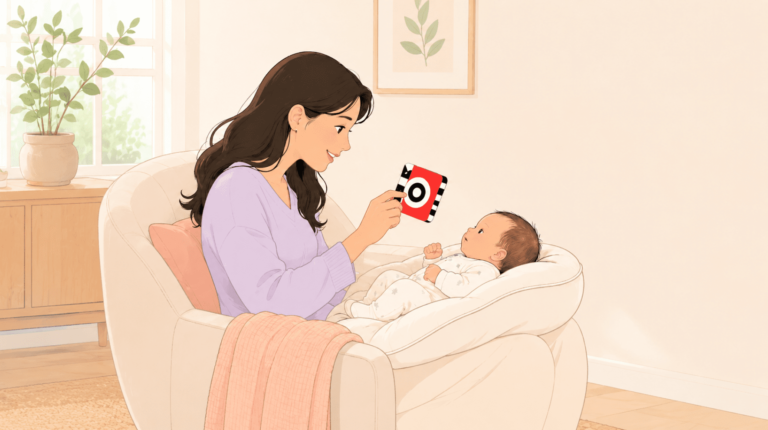
Your baby has been awake for more than two hours, and right now they are rubbing their eyes one minute and seem wide awake the next. Is it nap time, or are you about to put down a baby who is not ready? This is where wake windows come in.
They give you a rough map of how long your baby can comfortably stay awake before it becomes difficult for them to sleep.
In this guide, you will find wake windows by age, from newborn to 12 months, sample schedules, signs your baby’s wake windows may need adjusting, and practical tips for navigating changes as they grow.
We’ll also share insights from three pediatric sleep consultants:
- Natalie Nevares, founder of Mommywise
- Diana Zales, owner of Zzzs by Zales
- Macall Gordon, founder of Little Livewires LLC
For a broader overview, explore our baby sleep guide.
What are wake windows?
A wake window is the time your baby is awake between one sleep and the next. It starts when your baby wakes and ends when they fall asleep again, so feeding, diaper changes, play and winding down all gets counted in that window.
“ Wake windows refer to the amount of time a child’s brain can be awake before it needs a rest to consolidate learning and reset. The window starts when the child wakes (for the day or from a nap) to the time they are asleep (or getting there) again.”
Your baby can only manage so much awake time before they get tired. As they grow, these windows lengthen.
Cradlewise Note: No major health body, including the AAP and WHO, publishes official wake window numbers, so the ranges below come from pediatric sleep consultants and their experience.
Wake windows by age
Babies need a lot of sleep to grow and develop physically and mentally. Therefore, understanding their wake windows can help them get enough sleep to stay healthy and happy. As they age, their wake windows will get longer.
For example, newborns may barely stay awake for a diaper change and food before drifting back to sleep. However, when they are a few months old, they should be awake long enough for a feed, diaper change, and playtime, before needing another nap.
These ranges come from Natalie Nevares, who stresses that they are guidelines, not strict rules. Natalie gave her ranges in age bands, and the table follows those bands exactly.
Wake windows by age
| Age | Wake windows |
|---|---|
| Newborn (0 to 4 weeks) | 30 to 60 minutes |
| 4 to 12 weeks (about 1 to 3 months) | 60 to 90 minutes |
| 3 to 6 months | 75 to 120 minutes |
| 6 to 7 months | 2 to 3 hours |
| 8 to 10 months | 2 to 4 hours |
| 11 to 12 months | 3 to 4 hours |
As every baby is different, the wake windows may be different for your baby.
Macall Gordon puts these numbers in perspective: It’s important to understand that when anyone talks about “wake windows” or “sleep amounts,” there are large pluses and minuses to those figures. There is massive variability between children in the first year—so much so that it’s almost silly that we talk about targets or amounts of sleep that babies “should” get. These are numbers to shoot for, not objective milestones to hit.
Sample wake window schedules
Natalie Nevares has shared sample wake window schedules for 4, 6 and 9 months. However, wake-up and nap times are approximate and may vary depending on when your baby wakes and how long they sleep.
Sample 4-month-old wake window schedule
| Time | Activity |
| 7:00 a.m. | Wake up and feed |
| 7:00–8:30 a.m. | 90-minute wake window |
| 8:30 a.m. | First nap |
| 10:00–11:00 a.m. | Wake up and feed |
| After waking | 2-hour wake window |
| 12:00–1:00 p.m. | Second nap |
| 2:00–3:00 p.m. | Wake up and feed |
| After waking | 2-hour wake window |
| 4:00–4:30 p.m. | Third nap (catnap) |
| After waking | 2-hour wake window |
| 6:30 p.m. | Feed |
| 7:00 p.m. | Bedtime |
For detailed guidance on how 4-month-olds sleep, read our 4-month-old baby sleep guide.
Sample 6-month-old wake window schedule
| Time | Activity |
| 7:00 a.m. | Wake up and feed |
| 7:00–9:00 a.m. | 2-hour wake window |
| 9:00 a.m. | First nap |
| 11:00 a.m. | Wake up and feed |
| 11:00 a.m.–1:00/2:00 p.m. | 2–3-hour wake window |
| 1:00–2:00 p.m. | Second nap |
| 3:00 p.m. | Wake up and feed |
| 3:00–6:00/7:00 p.m. | 3–4-hour wake window |
| 6:30 p.m. | Feed |
| 7:00 p.m. | Bedtime |
For detailed guidance on how 6-month-olds sleep, read our 6-month-old baby sleep guide.
Sample 9-month-old wake window schedule
| Time | Activity |
| 7:00 a.m. | Wake up and feed |
| 7:00–9:30 a.m. | 2.5-hour wake window |
| 9:30 a.m. | First nap |
| 11:00 a.m. | Wake up and feed |
| 11:00 a.m.–2:00 p.m. | 3-hour wake window |
| 2:00 p.m. | Second nap |
| 3:30–4:00 p.m. | Wake up and feed |
| After waking | 3–4-hour wake window |
| 6:30 p.m. | Feed |
| 7:00 p.m. | Bedtime |
For detailed guidance on how 9-month-olds sleep, read our 9-month-old baby sleep guide.
How many wake windows should a baby have
Wake windows differ from baby to baby, however, the younger the baby, the more naps and wake windows they will have. A 4-month old has three naps and four wake windows, while the 6- and 9-month olds often have two naps and three windows.
Furthermore, a baby has one wake window for each stretch between sleeps, so the number of windows follows the number of naps. Your baby might start to show signs of dropping a nap around 6 months of age (check schedule for 6-month old), in which case wake windows will also drop by one.
It also depends on whether you have an established sleep routine and your baby’s temperament, so each day may vary slightly.
Our baby sleep guide has more on how naps shift through the first year.
Signs your infant wake window is too short or too long
Sleepy cues to watch for
Babies tell us when they are getting tired, often before their wake window is up.
Look for the following signs:
- Yawning
- Rubbing eyes or ears
- staring off
- Slower movements or a drop in activity level
- Fussing
- Turning away from toys or faces
- Blinking more often
- Clenched fists
“ Wake windows are absolutely dependent on age. The younger the baby, the shorter the window before they need a break. If your baby’s wake window is two hours, set a notification for an hour and 45 minutes, then start watching your baby closely. You may see subtle sleepy signals that you may not have noticed before: spacing out, red eyebrows, focusing on their hands. Try right then to move toward that nap.”
Cradlewise Note: Once you notice these signs, determine the duration of their wake window by timing it, and ideally start putting them down five minutes before the window ends. This way your baby is sleepy, but not completely exhausted. You will likely spend less time trying to soothe your baby to sleep, which may make it easier for your baby to fall asleep.
Safe sleep note: If your baby falls asleep in a car seat, stroller, swing or carrier, the AAP advises moving them to a firm, flat sleep surface on their back as soon as possible. Explore our safe sleep guide to learn more on safe sleep guidelines for your baby.
Signs your infant wake window is too short
Diana Zales says the clearest sign is a baby who fights the nap or takes short naps. Natalie adds that your baby may cry more when put down, take longer than usual to fall asleep, or only nap about 30 minutes.
If this sounds familiar, Natalie recommends trying stretching the window by 10 to 15 minutes and seeing what happens.
Signs your infant wake window is too long
“ The clearest signs that a wake window is too long would be baby being super fussy or emotional going down, and then waking up after 30 minutes or so, and having trouble to fall back to sleep. This show shows that a baby may be slightly overtired and is having difficulty connecting sleep cycles.”
Natalie says babies get a “second wind”: babies can get overstimulated and resist sleep even though they are exhausted.
Quick comparison
| Particulars | Too short | Too long |
|---|---|---|
| Going down | Cries or takes longer than usual to settle | Very fussy or emotional |
| Napping | Naps around 30 minutes, or fights the nap | Wakes after about 30 minutes and cannot resettle |
| Mood | Not tired enough yet | Overtired, wired, second wind |
| Try | Stretch the window 10 to 15 minutes | Offer sleep a little earlier next time |
How to manage wake windows?
How do I find the right wake window for my baby?
Start with the age range, then watch your baby. Natalie recommends following both the clock and your baby’s cues: the clock gives a rough time for the next sleep, and your baby shows you when they’re ready a little earlier or later, such as when they’re sick or having short naps.
Natalie also reminds:
“ Wake windows are just guidelines, and not meant for strict implementation. Babies are human, after all. Some days they need more sleep than others.”
When do babies go from three naps to two naps a day?
“ Babies go from 3 naps to 2 naps around 6-7 months old. You can tell when they’re ready when they start fighting the last nap of the day, or just refuse to sleep later in the afternoon.”
Diana prefers a baby-led approach when it comes to dropping a nap.
She notes: For this, I would look out for signs like baby fighting naps, waking up more during the night, or waking up earlier in the morning.
How to stretch a wake window?
“ I recommend that parents adjust by stretching wake windows 15-30 minutes until their baby is settled into a new schedule.”
Natalie adds: For example, a 6-month-old baby should be ready to drop to 2 naps a day. They will do that by stretching the wake windows 15-30 minutes between wake-up and first nap, between first and second nap, and again between the 2nd nap and bedtime.
However, on transition days, Diana says it’s fine to go back and forth: try stretching, and offer the extra nap if it’s a hard day. If you’re changing things, start with the first nap, since it tends to be the longest and the easiest. Diana also sees families stay on one schedule for too long while their baby’s sleep requirement changes quickly, so revisit the plan when sleep starts to wobble.
Cradlewise Tip: For three days, jot down wake-up time, nap start and nap length before you change anything. It is easier to spot patterns when they are recorded.
Cradlewise Note: The Cradlewise smart crib tracks your baby’s movements and sleep patterns, and gently responds to fussing. Looking at these patterns over a week or two can show you which window length helps your baby settle.
What to do during awake windows by age
| Age | Activities |
| Newborn to 3 months | Feed, cuddle, talk and sing Encourage short tummy time sessions and face-to-face play |
| 4 to 6 months | Make your baby reach for toys Encourage rollingEnjoy mirror playSing gentle songs |
| 7 to 9 months | Encourage crawlingGive safe objects to bangGive board books Play peekaboo |
| 10 to 12 months | Encourage pulling up, stacking, or walking If your baby is on solids, give them baby-appropriate snacks |
“ I suggest lots of excitement and music and dancing and snacks (if baby is on solids) to help pass the time.”
Tips for managing wake windows
This is how you can manage your baby’s wake windows during certain unavoidable events or circumstances:
- When you are traveling: Aim for familiar sleep spaces and maintain the routine closely, but let the clock be flexible.
- When your baby is ill: Natalie says windows may run shorter when your baby is sick. Diana adds that extra time in naps can help them recover.
- During growth spurts and regressions: Expect more fussing and shifting naps. Keep the routine steady and be flexible with timing.
How to handle shorter and more frequent naps?
“ I recommend the baby staying in the crib for a full hour, even if the nap is shorter. If baby is in the dark room with the sound machine on, they’re still able to get rest, which will help them extend to the next wake window.”
She adds that if your baby wakes after a longer nap, wait about 10 minutes before going in, which will help your baby feel more comfortable waking up.
Learn how white noise can help your baby sleep better.
Is it okay to wake a baby from a nap to keep to the schedule?
“ Yes, it’s ok to wake a baby from a nap to keep to the schedule if that’s important for parents, if they have other kids they need to accommodate, or if a nap is getting too close to bedtime.”
Natalie adds, “For example, if a 4-5-month old baby goes down for a 4pm nap, I would recommend waking them after 45 minutes.”
Cradlewise Note: However, parents should consider the baby’s total sleep, feeding needs, and bedtime rather than waking a baby simply to enforce a schedule.
Conclusion
While wake windows are a helpful map, they are not a rulebook. Natalie recommends not to stress over wake windows, but spend more time observing your baby, learning their cues, and adjusting wake windows accordingly.
Listen to what experts say, but do not obsess over it. Remember, every baby is unique. However, if sleep worries you at any point, talk to your pediatrician.
FAQs
Q: Do newborn wake windows really matter, or can I just follow my baby's cues?
A: Both help. Use the clock as a guide while watching your baby for cues that they are ready slightly earlier or later.
Q: Does the wake window include feeding time?
A: Yes. It runs from the moment your baby wakes to the moment they fall asleep again, feeds, diaper changes, and bath time included.
Q: Should I wake my baby from a nap to stick to the schedule?
A: Sometimes. It is okay to wake up your baby from a nap if you have other children to care for or a nap is getting too close to bedtime. However, consider your baby’s total sleep, feeding needs and bedtime rather than waking a baby just to enforce a schedule.
Q: What should I do with the next wake window after a short nap?
A: Leave your baby in the dark room with white noise for a full hour so they can still rest. You can also offer an earlier next nap if your baby is showing sleepy cues.
Q: Should I use my premature baby's adjusted age for wake windows?
A: Take a look at your baby’s adjusted and actual age before making a decision. And also consider what the pediatrician says about their growth and development.
Q: How do wake windows change during a sleep regression or growth spurt?
A: They often get a little messier. Keep the routine steady, follow your baby’s cues and allow shorter or longer windows for a few days.
Q: When do babies drop from 3 naps to 2?
A: When your baby, usually around 6 to 7 months, is fighting naps, waking more at night, or waking earlier, they are ready to go from three to two naps a day. You can adjust this period by stretching windows 15 to 30 minutes between wake-up and first nap, between naps, and before bedtime.
Q: How long should a 4-month-old wake window be?
A: A 4-month-old baby should typically have an awake window of 1.5 to 2 hours.
Q: How long should a 1-month-old wake window be?
A: Newborns in their first month usually stay awake between 30-60 minutes.
You may also like:
- Night weaning: When to start and how to do it gently.
- 15-month sleep regression: Causes, signs, and tips to help baby sleep.
- How to get your toddler to sleep in their own bed (without bedtime battles).
Sources:
- Safe sleep note. AAP. 2026. How to Keep Your Sleeping Baby Safe: AAP Policy Explained.